Dairy products go to the Russian Federation from a nuclide-contaminated zone in Belarus, but the journalist who wrote about it was put on trial. How much strontium can be in Belarusian milk, DW found out.
In April 2016, the Associated Press (AP) journalist Yury Karmanov received a certificate of 10 times the norm of strontium-90 in milk at the Minsk city center of hygiene and epidemiology. As a private individual, he submitted for inspection milk from a farmer who grazes cows in the territory contaminated by radioactive fallout after the Chernobyl accident, and supplies his raw materials to the local dairy company Milkavita.
The danger of excess strontium for the human body has been proven. But after the publication of Karmanov's article on the AR website about the problem of food production on the lands of the Polisky State Radiation and Ecological Reserve, which includes the 3 Belarusian districts most contaminated by the Chernobyl nuclear power plant explosion - Bragynskyi, Narovlyanskyi and Khoynitskyi - "Milkavita" demanded a refutation from the journalist.
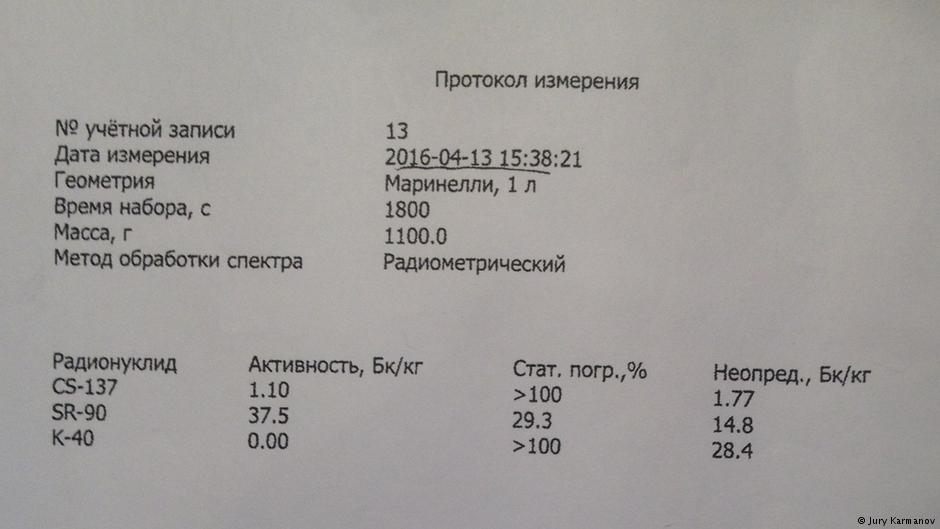
Certificate of the Minsk Center of Hygiene and Epidemiology, issued to Yuriy Karmanov
The court sided with the firm, which insists that the mentioned strontium reference tarnishes its business reputation. Although the Minsk examination admitted that it had issued this particular document, it called the results of the inspection inaccurate.
According to the law on mass media of Belarus, a journalist is not responsible for publishing information submitted by a state body. Currently, the case regarding Yuriy Karmanov's appeal is being considered by the Supreme Court of the Republic. DW conducted its own investigation and, with the help of experts and documents from open sources, found out how much strontium can actually be found in Belarusian milk.
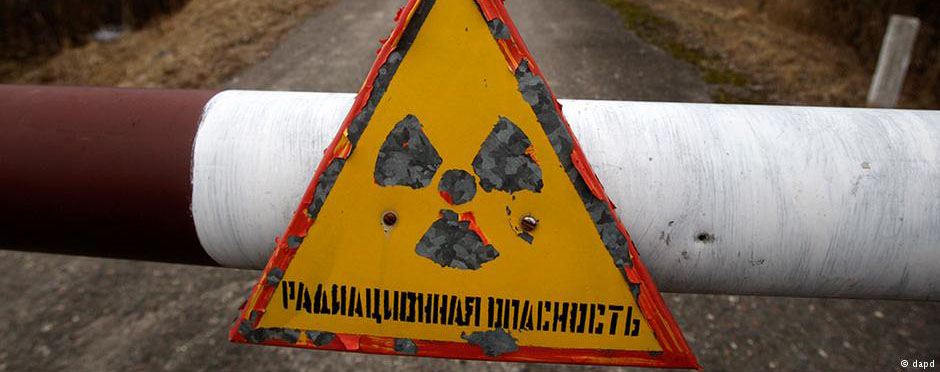
Under the sign "Radiation danger"
The village of Gubarevichi, Khoynyk district, Gomel region, where the farm that supplies milk to "Milkavita" is located, is in the "zone of further resettlement". This is "the territory where the average annual population radiation dose may exceed 5 mSv per year above the natural and man-made background", as stated in the 2012 Social Radiation Passport of the district. Now there are almost no residents left in the village.
"When we were preparing a report for AR from the Belarusian Chernobyl zone, it simply killed us that the cows were grazing right next to the "Danger of Radiation" sign 3 meters from the barbed wire, so we decided to check what kind of milk the farmer treated us to," recalls AR journalist Yuriy. And he told DW that together with a colleague, he saw how a tractor was working on the site of recently demolished residential buildings and sowing was going on. And this is not accidental.
The authorities of Belarus believe that "Chernobyl myths about radiation danger must be overcome." They do not hide the fact that in the Poliske State Radiation and Ecological Reserve, land that was considered unusable after the accident at the Chernobyl Nuclear Power Plant has been put into agricultural use. Food supplies from there go both to Russia and to local trade. The initiator of this idea is Oleksandr Lukashenko himself. "We did the right thing by starting the rehabilitation of these lands, the inconveniences are already devastating," said the Belarusian president while visiting the Gomel region last year on the day of the 30th anniversary of the disaster at the Chernobyl nuclear power plant.
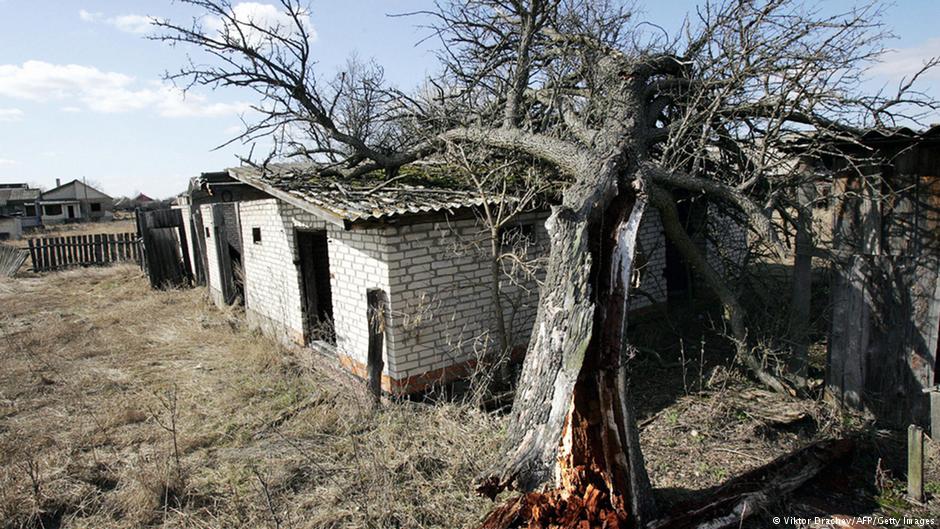
Displaced village in the Chernobyl zone
Agriculture in the radiation-affected region of Belarus "is carried out on an area of 937,000 hectares of land contaminated with cesium-137 with a density of more than 1 Curie per 1 km, of which 308,000 hectares are simultaneously contaminated with strontium-90," according to 2016 data. RB.
In the methodological instructions of the Ministry of Agriculture and Food on the quality of meadows and arable land in these territories, it is stated that "practically all radionuclides in the upper soil layer will be available to plants in the near future. The processes of local secondary pollution due to radio migration are underway.
But the OAC reports on the development of special recommendations "for the production of normatively clean agricultural products in conditions of radioactive contamination." From 2011 to 2016, the state sent about 1 billion dollars for protective measures.
Experiment on humans?
So, is it possible to grow clean products on the contaminated territory that will not threaten human health? "No. Even if it seems to the Belarusian authorities that the soil can be cleaned, it is not possible to conduct an experiment on people," Yuriy Bandazhevskyi, an expert in the field of radiation medicine, professor and head of the Kyiv Coordination Analytical Center "Ecology and Health", said in an interview with DW.
The scientist has been working directly in the Chernobyl zone of Ukraine for 4 years on a project supported by the European Commission related to the medical consequences for the population in the region of the disaster at the Chernobyl nuclear power plant.
"The half-life of strontium-90 is 30 years, and now it begins to actively penetrate through the root structure into the leaves, the grass that eats cattle on the Chernobyl pastures, and then the nuclide settles in biological organisms, mainly in the bone system," says Bandazhevsky.
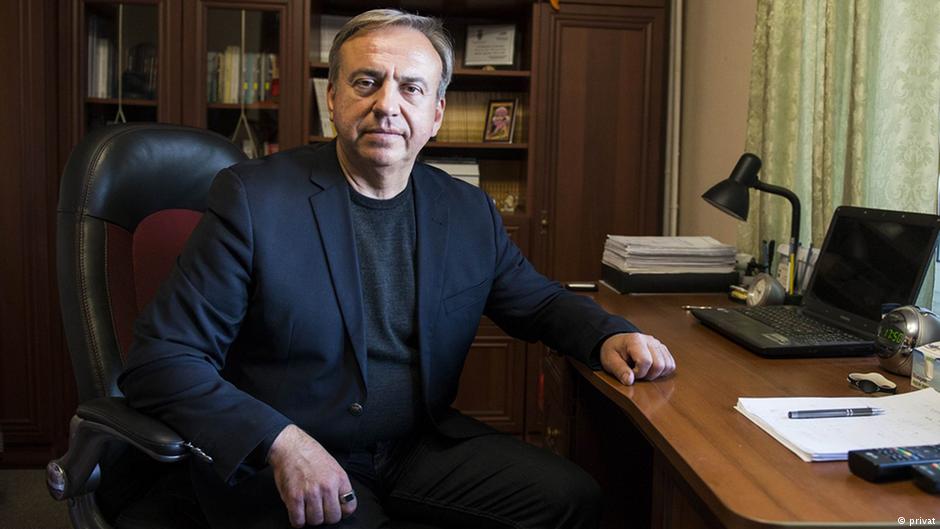
Yuriy Bandazhevsky
But in the soil of the Chernobyl region "not only strontium, but a whole bouquet of cesium, isotopes of plutonium, americium". According to the researcher, practice has shown that nuclides affect heredity, increasing the number of leukemias, cardiovascular diseases, malignant tumors and deaths.
A Russian professor, a member of the New York Academy of Sciences, Oleksiy Yablokov, also wrote about the risks of diseases from the health effects of small doses of radiation and the need to study this problem.
The situation in Belarus and Ukraine is the same, it needs to be seriously dealt with and joint efforts, Bandazhevsky is sure. But it is almost impossible to get objective information from Minsk: "Lukashenko kept everything secret 10 years ago and now everything is fine there."
"We have accumulated a big problem"
However, it turned out that "strontium-90 in the body of Belarusians may be greater than previously thought." Moreover, it accumulates in people who have never been to the contaminated territory and even in those born after the Chernobyl accident.
In an article published in the state newspaper "Respublika" in 2011, the associate professor of the Department of Radiation Safety of the State Environmental University named after O.D. Sakharova Yevhen Khadzhinov wrote: "We have "unearthed" a big problem, the scale of which is difficult to estimate. There is an unknown channel of arrival of this nuclide with food products from the retail network."
Khadzhinov came to the conclusion that control over strontium-90 in Belarus is undeservedly reduced, because "its particles began to actively decay, and the released strontium in atomic form increasingly enters plants and further down the chain into the human body".
"Rossilkhoznadzor has no complaints"
Let us return to the production of agricultural products in the Chernobyl zone. About 320 tons of cheeses from "Milkavita" - more than 90 percent of all produced - go to Moscow, Voronezh, and St. Petersburg every month. The rest goes to Belarusian consumers. In court, the firm insisted that the raw materials and finished products undergo proper radiation control, and that Rossilhospnadzor, which is usually strict with Belarusian products, has no complaints about nuclides. This was confirmed by the Russian agency itself.
However, in a January interview with the newspaper "Gomelska Pravda", "Milkavity" specialists admitted that the company does not conduct strontium analysis in Gomel, because "it considers it inexpedient to buy the necessary equipment for these purposes. Control is carried out according to republican regulatory documents once every six months."
"Therefore, it is worth considering the difference between raw materials from the contaminated zone and finished products. The absence of excess strontium in the finished product does not mean at all that the raw materials - Chernobyl meat, grain or milk - met the same standards", - the former sanatorium expresses his assumption.
According to him, there is a simple way to reduce the concentration of the nuclide in the finished product - to dilute the dirt with clean water in order to obtain a product with acceptable standards adopted in the country of sale. Thus, milk for Russians can contain 25 Bq/kg of strontium-90, and for Belarusians the accepted norm is stricter - 3.7 Bq/kg.
The expert told DW that in the first years after the accident at the Chernobyl nuclear power plant, "according to the developed recommendations, meat from the contaminated area was first subjected to deep freezing for 3-4 years in order to reduce the level of radiation, and then 3 percent was added to clean raw materials". raw materials "Someone very clever invented a way to use contaminated material, and it supposedly won't harm people's health," Yurgel says.
In his opinion, the main problem in Belarus has remained unchanged: "We do not have independent laboratories where you can get an objective analysis with a signature and seal, and not a piece of paper that the state expert first issues, and then the court rejects the results and does not recognize the document as legally significant."
Source: http://www.dw.com/ua/Belarusian-milk-for-russia-and-strontium-in addition/a-37881010